GST/HST Is Due July 31: Find Every Input Tax Credit in Your Q2 Receipts
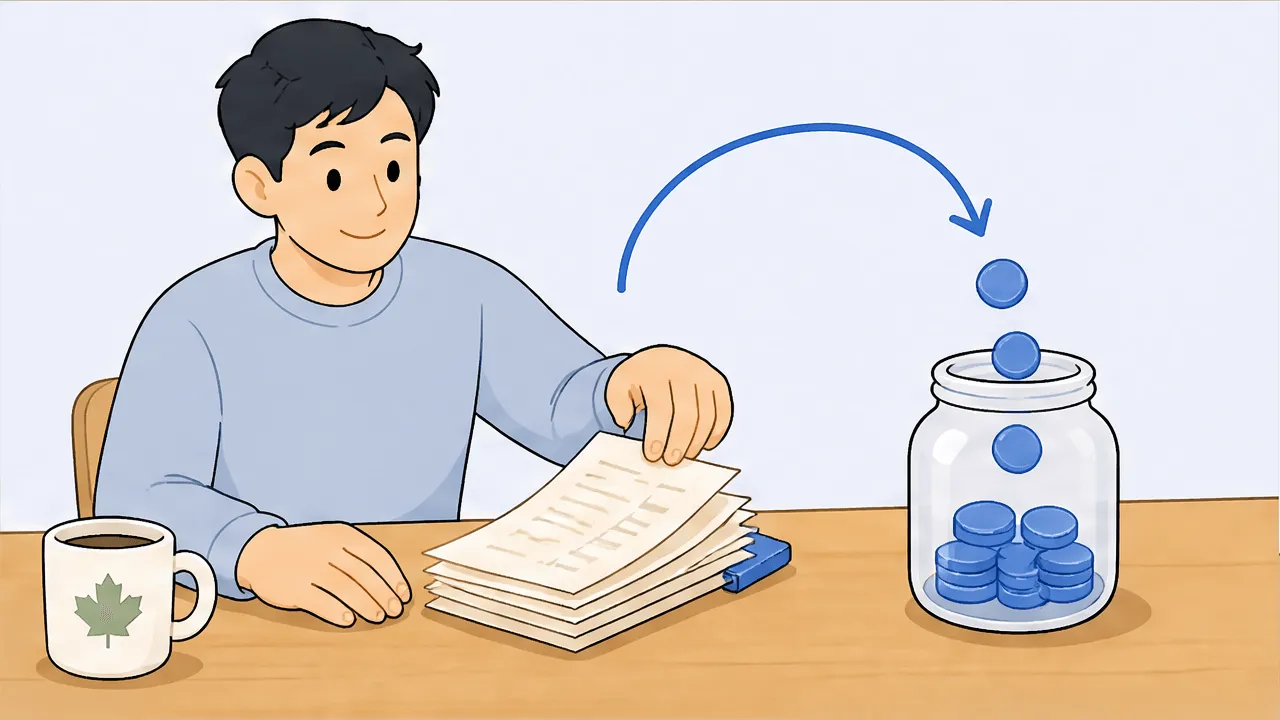
An input tax credit (ITC) lets a GST/HST-registered business recover the GST/HST it paid on purchases used in its commercial activities, netting that tax off what it remits. You can only claim ITCs if you are registered, and you need the right documentation, which scales with the purchase amount. For quarterly filers, an April-to-June period is due July 31, so Q2 is the receipts to comb now. This is general guidance, not tax advice.
If you are GST/HST-registered and the term "input tax credit" makes your eyes glaze, you are not alone, and you are also probably leaving money with the government that you are entitled to claim back. This is the gentle primer: what an ITC actually is, who can claim one, which everyday Q2 purchases carry one, and why July 31 is the date to have in the back of your mind. No jargon, no panic, just the shape of the thing so you can act on it.
Think of this as the on-ramp. When you are ready for the full, step-by-step pre-deadline hunt, we wrote that separately: the full pre-deadline guide to finding ITCs in your Q2 receipts. Start here to understand it; go there to do it close to the wire.
What an input tax credit actually is
When you buy something for your business, you usually pay GST/HST on top of the price, the same tax a consumer pays. The difference is that, as a registrant, you are running a business, and the system is not meant to tax your business inputs twice. An input tax credit is the mechanism that fixes that: it lets you recover the GST/HST you paid on purchases used in your commercial activities, by netting that tax off the GST/HST you collected and have to remit.
A simple way to picture it. Say in a quarter you collected $1,000 of GST/HST from your customers, and you paid $300 of GST/HST on your own business purchases. Instead of handing over the full $1,000, you claim the $300 as input tax credits and remit the difference, $700. The ITC is the credit for tax you already paid as a buyer.
That is the whole idea. The rest is about who qualifies and what proof you need.
General guidance, not tax advice. The rules and amounts here come from CRA's published guidance, but how they apply depends on your situation. Confirm with your accountant or CRA.
You have to be registered
This is the first gate, and it catches people. You can only claim ITCs if you are a GST/HST registrant, and you must have been registered during the reporting period in which the tax was paid or became payable. If you are not registered, you do not charge GST/HST, and you cannot claim it back either.
Registration becomes mandatory once your total worldwide taxable supplies (including those of associates) pass $30,000, measured in a single calendar quarter or over the previous four consecutive calendar quarters. Below that, you are a "small supplier" and registration is optional, but registering voluntarily is what opens the door to claiming ITCs in the first place.
One thing not to confuse: the $30,000 figure is only the GST/HST registration trigger. It has nothing to do with reporting income. All self-employment income is reportable on your T2125 regardless of whether you are registered for GST/HST.
The four conditions, in plain terms
CRA sets out four core conditions for an ITC. Stripped of the formal language, they are:
- You bought the thing for use in your commercial activities (not personal use).
- You were a GST/HST registrant during the period the tax was paid or became payable.
- GST/HST was actually paid or payable by you on the purchase.
- You have enough documentation to back the claim, and you claim within the time limit.
A practical note on the personal-versus-business split: if something is used partly for business and partly personally (a phone line, say), you claim the ITC only on the business-use portion, using a split that is fair, reasonable, and applied consistently.
Which Q2 purchases tend to carry ITCs
Most ordinary business inputs you paid GST/HST on can carry an ITC, as long as they meet the conditions above. Here are common categories, each tagged to the T2125 line where the expense lands, so you can recognize them in your own April-to-June receipts.
| Purchase | T2125 line | Note |
|---|---|---|
| Advertising and marketing | 8521 | Keep the vendor invoice showing the GST/HST |
| Office supplies and stationery | 8811 | Itemized receipt, not just the debit slip |
| Software, subscriptions, memberships | 8760 | Subscription invoice with the supplier's GST/HST number |
| Professional fees (legal, accounting, bookkeeping) | 8860 | Invoices over $500 also need your name and a description |
| Rent for business premises | 8910 | Commercial rent is generally taxable |
| Utilities and business phone | 9220 | Claim only the business-use share if mixed |
| Repairs and maintenance | 8960 | Large improvements may be capital, not a current ITC |
| Motor vehicle operating costs | 9281 | Business-use percentage only; pair with your km log |
| Delivery, freight, shipping | 9275 | Courier and freight invoices showing GST/HST |
| Business travel (airfare, lodging, ground) | 9200 | Meals follow the 50% rule for income tax |
You do not have to memorize this. You can run a purchase through the GST/HST ITC finder to see whether it is the kind of expense that typically carries an ITC and which line it sits on.
Why the documentation, and the full receipt, matters
The fourth condition, documentation, is where a lot of otherwise-valid ITCs fall apart. CRA's required records scale with the size of the purchase:
- Under $100: supplier name, the date, and the total amount.
- $100 to $499.99: the above, plus the supplier's GST/HST registration number and either the GST/HST amount or a statement that the total includes GST/HST.
- $500 or more: all of the above, plus your name, the terms of payment, and a description of what you bought.
This is the practical reason to keep the full itemized receipt, not the card slip. The tap-to-pay summary almost never shows the supplier's GST/HST number or the tax amount, and without those, the claim on a mid-sized purchase is hard to support. The little slip is not enough; the real receipt is.
This is where reading receipts line by line earns its keep. scan-ai captures the whole receipt, including the GST/HST detail, and reads each line, so the tax information you need for an ITC is retained rather than thrown away with the rest of the receipt. For more on what makes a digital receipt hold up if CRA reviews it, see are digital receipts valid for CRA audits.
July 31 is the date to keep in mind
For monthly and quarterly GST/HST filers, the return and the payment are both due one month after the end of the reporting period. So a quarterly period of April 1 to June 30 is due July 31. That is why right now, in late June, the smart move is simply to make sure your Q2 receipts are captured and their GST/HST detail is intact. You are not filing today. You are making July 31 a non-event by getting the inputs in order while they are fresh.
When the deadline is close and you want the step-by-step version, including how to total your ITCs by category and avoid the common misses, that is the job of the full pre-deadline guide. For the broader self-employed picture, Canadian self-employed tax deductions covers the income-tax side that runs alongside GST/HST.
Frequently asked questions
What is a GST/HST input tax credit in simple terms? It is a credit that lets a registered business recover the GST/HST it paid on business purchases, by subtracting that tax from the GST/HST it collected and has to remit. You remit the difference instead of the full amount you collected.
Do I have to be registered to claim ITCs? Yes. Only GST/HST registrants can claim ITCs, and you must have been registered during the period the tax was paid or became payable. Registration is mandatory once you pass the $30,000 small-supplier threshold, and optional (but ITC-enabling) below it.
Which purchases qualify for an input tax credit? Ordinary business inputs you paid GST/HST on, used in your commercial activities: advertising, office supplies, software, professional fees, rent, utilities, repairs, vehicle operating costs, shipping, and business travel. Mixed-use items qualify only for the business-use share.
What records do I need to claim an ITC? Documentation scales with the amount: under $100 needs supplier, date, and total; $100 to $499.99 adds the supplier's GST/HST number and the tax amount; $500 or more adds your name, payment terms, and a description. Keep the full itemized receipt, not the card slip.
When is quarterly GST/HST due in Canada? For monthly and quarterly filers, the return and payment are due one month after the period ends. An April-to-June quarter is due July 31. This is general guidance; confirm your filing frequency and dates with CRA.
Is the $30,000 threshold about income or GST/HST? It is only the GST/HST registration trigger. All self-employment income is reportable on your T2125 regardless of registration. The $30,000 figure tells you when you must register to charge and claim GST/HST, nothing more.
Your next step
Input tax credits are just the system letting you recover the GST/HST you already paid on business inputs. The two things that decide whether you actually get them: being registered, and keeping documentation strong enough to support the claim. With July 31 on the horizon for quarterly filers, the move now is to capture your Q2 receipts cleanly while the detail is fresh.
Run a purchase through the GST/HST ITC finder to see what typically qualifies, then start free at scan-ai.ca: 20 receipt scans and 5 AI chats, no credit card. Capture each Q2 receipt with its GST/HST detail intact, and when the deadline nears, work through the full pre-deadline guide.
This article is general information, not tax advice. Tax rules change and depend on your specific situation. Confirm anything with real stakes with a qualified accountant or CRA.